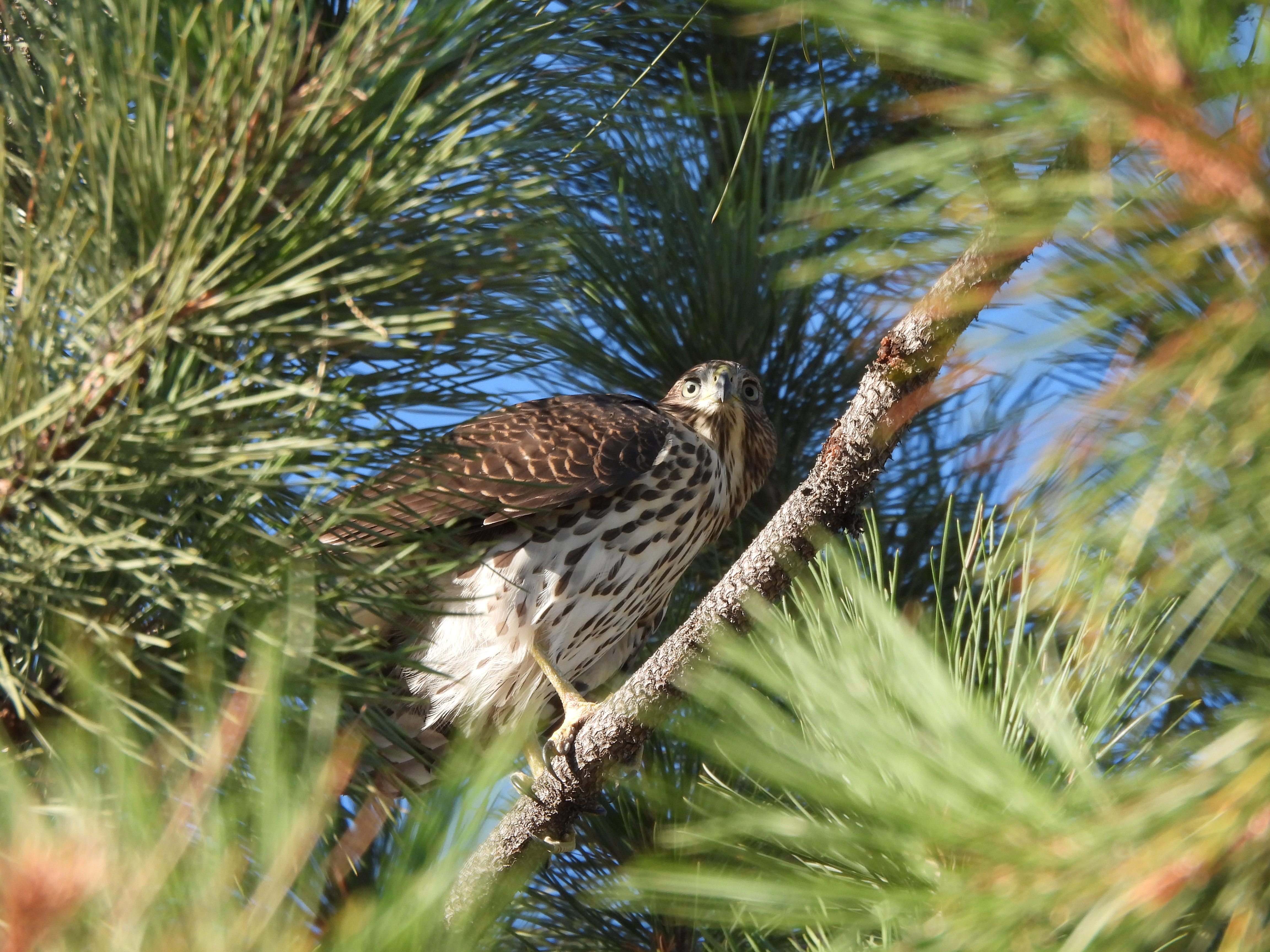
August is not a huge month for seeing new species – of anything, really. Even so, I added two new year-birds, one of which was also a life bird: an Ash-throated Flycatcher, marking only the 18th reported sighting in Montana. The second was a Cooper’s Hawk that was haunting our yard and feeders for a couple of days.
Curiously, I also spotted a Cooper’s in the same area as the flycatcher when I went back the day following that sighting. I had a wonderful opportunity to observe the Cooper’s pursuing a juvenile magpie for quite a few minutes. The Coop was relentless, but the magpie was pretty cunning. After about 10 minutes in my vicinity, the magpie made a series of fast, low escapes to a series of trees leading away from me and the chase continued over a ridge out on my sight. Both of those species can show some pretty amazing aerobatics.
I don’t usually visit the Tubbs trailhead in August since I don’t think of it as a birding, wildflower, or butterfly hotspot. However, after visiting several times in the last couple of weeks, I was surprised by both the density and diversity of bird species present. Right after sunrise, that little meadow is simply full of life!
From a wildflower perspective, I added 13 species to the year list, plus I was able to find an American Moonwort as a new species sighting. Moonworts are charismatic little plants that are on my radar now as late summer species to find at higher elevations. Anyway, my August average over the last four years is ten, so 13 in bloom isn’t half bad. On the other hand, the butterfly report is pretty sad. I couldn’t get a single positive ID on butterflies or moths in August, though that’s fairly typical for late summer; I’ve only managed one positive August ID since 2024.
Now, that being said, I still logged 83 species across 94 total observations on iNaturalist. I’m trying to use Seek more often for quick plant and insect IDs, and I’m making a concerted effort to upload photos to iNat whenever I capture a decent image.
This might sound like simple “listing,” but my reasoning is actually more practical: posting frequently populates their database with solid images and precise geotags that researchers can use. Furthermore, iNaturalist leverages those uploads to refine its visual recognition engine. My hope is that contributing consistent observations – even with less-than-stellar photos when the ID is certain – helps make those algorithms more accurate for everyone.
Obviously, my paltry 94 images are a drop in a very large bucket, but it all adds up. But as I often say, people only protect what they care about, and they only care about what they understand. If platforms like Seek, iNaturalist, Merlin, and eBird can help folks engage with and understand the local flora and fauna, I believe we stand a much better chance of conserving what’s left of the natural world.
Leave a Reply