Lewis and Clark County is the 14th largest county in Montana. At 3,498 square miles, L&C is larger than either Delaware or Rhode Island. So, the idea that we could get up early, drive 75 road miles all trending north, and still not leave the county isn’t a foreign concept to us – though it might strike folks in other parts of the country as a bit odd.
But that’s what we did. After dropping The Youngest Daughter off at the airport for her semester abroad, we hit the road.
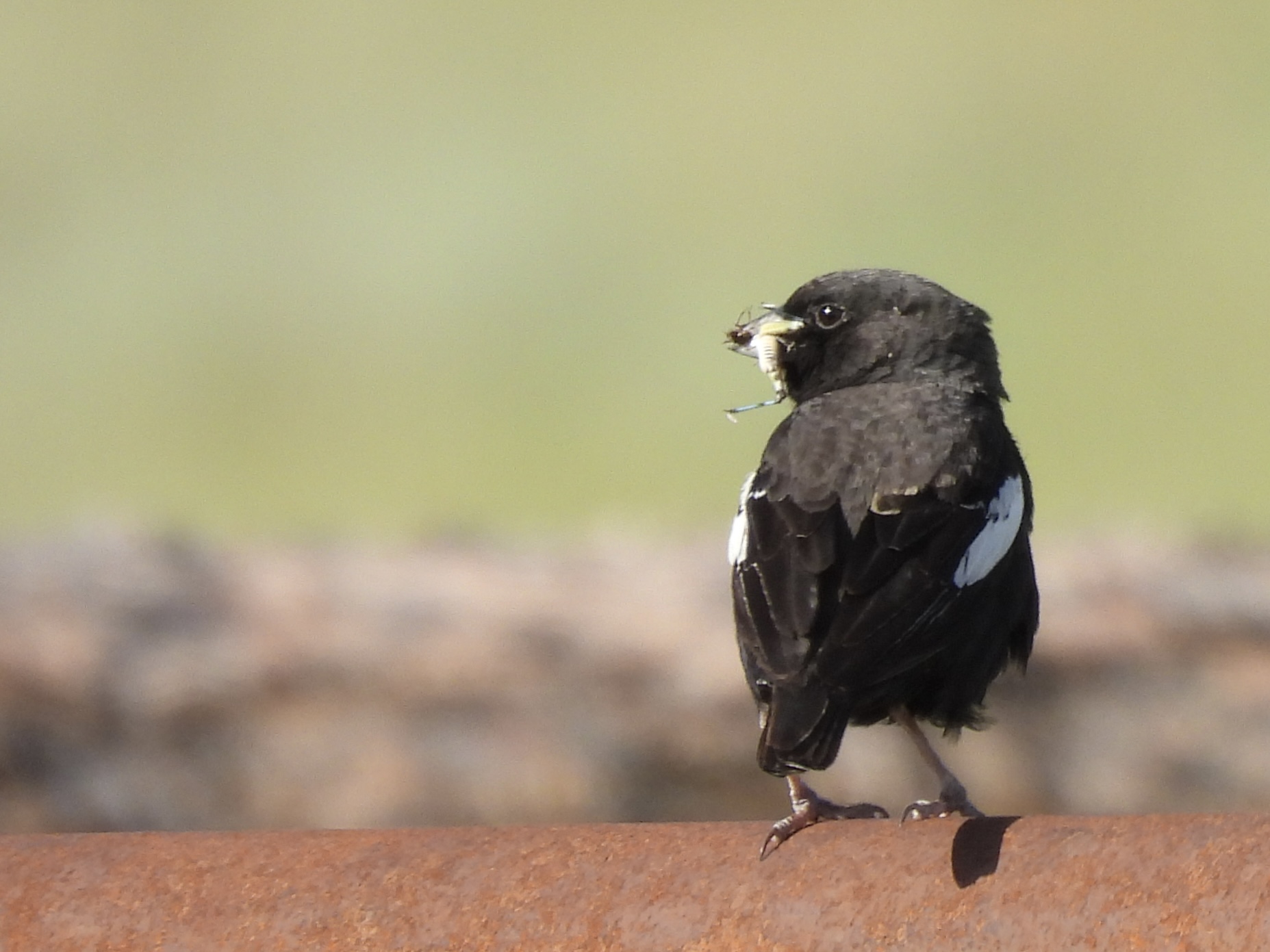
Our goal was to spot a Lark Bunting that had been reported on a road not too far from Augusta, Montana on a series of lovely backroads. As an added bonus, people were also reporting Thick-billed Longspurs in the area. As an additional bonus, we knew Ferruginous Hawks could be found in that greater region (spoiler alert – we didn’t find one on this trip). The Lark Bunting is a native bird, but because we had never seen one, we were determined to find it.
We did find the Lark Bunting and the Thick-billed Longspur. In fact, we found about a dozen Lark Buntings, at least three Thick-bills, dozens of Chestnut collared Longspurs, Horned Larks and about 55 other species of birds that day. It was a great outing.
Lark Buntings are one of only six passerine (or perching bird) species endemic to the US grasslands. The others are Sprague’s Pipit, Thick-billed Longspur, Chestnut-collared Longspur, Mountain Plover, and Baird’s Sparrow. The Middle Daughter (TMD) and I have seen the first three, but not the latter two on that list. I think we need to hatch a plan to rectify that situation. This is where learning to use iNaturalist and eBird can come in quite handy!
By way of a couple of other trivial facts, and setting aside the oddball, errant Eastern Meadowlark (which only occasionally and accidentally wanders into Montana), this trip allowed us to see every bird in Montana with the word “Lark” in its name: Meadowlark, Horned Lark, Lark Sparrow, and Lark Bunting. In addition, this excursion means we have checked off all the common longspurs for the year: Lapland, Chestnut-collared, and Thick-billed. There is the occasional Smith’s Longspur that drifts into the northeast corner of the state, but the State of Montana considers them accidental like the Eastern Meadowlark.
Across a lovely three-day weekend, we logged about 11 miles of hiking and walking through the prairie, identifying a total of twenty-four new species of flowers, birds, and butterflies for the year. Another 8 to 10 species are still eluding a positive ID, but it’s a good reminder that there is still a lot of life out there in the field.
July is usually when things get a bit stagnant from a birding perspective. Our 8-year average for new species seen in July is just four, so this trip already puts us halfway there. And as we wind down from the holiday weekend, we are now just one bird away from matching our best year ever.
I’m hopeful we can spot 16 more species before the end of the year – reaching 225 species in a single year feels like a good sign that bird populations aren’t in collapse, though we have noticed far fewer individuals this year. That part is more than a little concerning.
I hope if you read this, it makes you want to go out and find yourself in nature.
For the year to date
Birds: 209
Flowers: 157
Butterflies: 36
3-day weekend totals
New Birds (2)
• Lark Bunting *
• Thick-billed longspur
New flowers (15)
• Bog Wintergreen
• Seep Monkeyflower
• Tall White Bog Orchid
• American Speedwell
• Slender Bog Orchid
• Pacific Coralroot
• Musk
• Beargrass
• Orange Agoseris
• White Hawksweed
• Brook Saxifrage
• Twinflower
• Bunchberry
• Fireweed
• Smallleaf Pussytoes
New Butterflies (7)
• Chryxus Arctic
• Mormon Fritillary
• Hayden’s Ringlet
• Anise Swallowtail
• Silver Spotted Skipper
• Northern Crescent
• Dreamy Duskwing
• Unknown Comma – still working the ID out.
Tap or click the images to enlarge


*Lark Bunting is a life bird
Leave a Reply