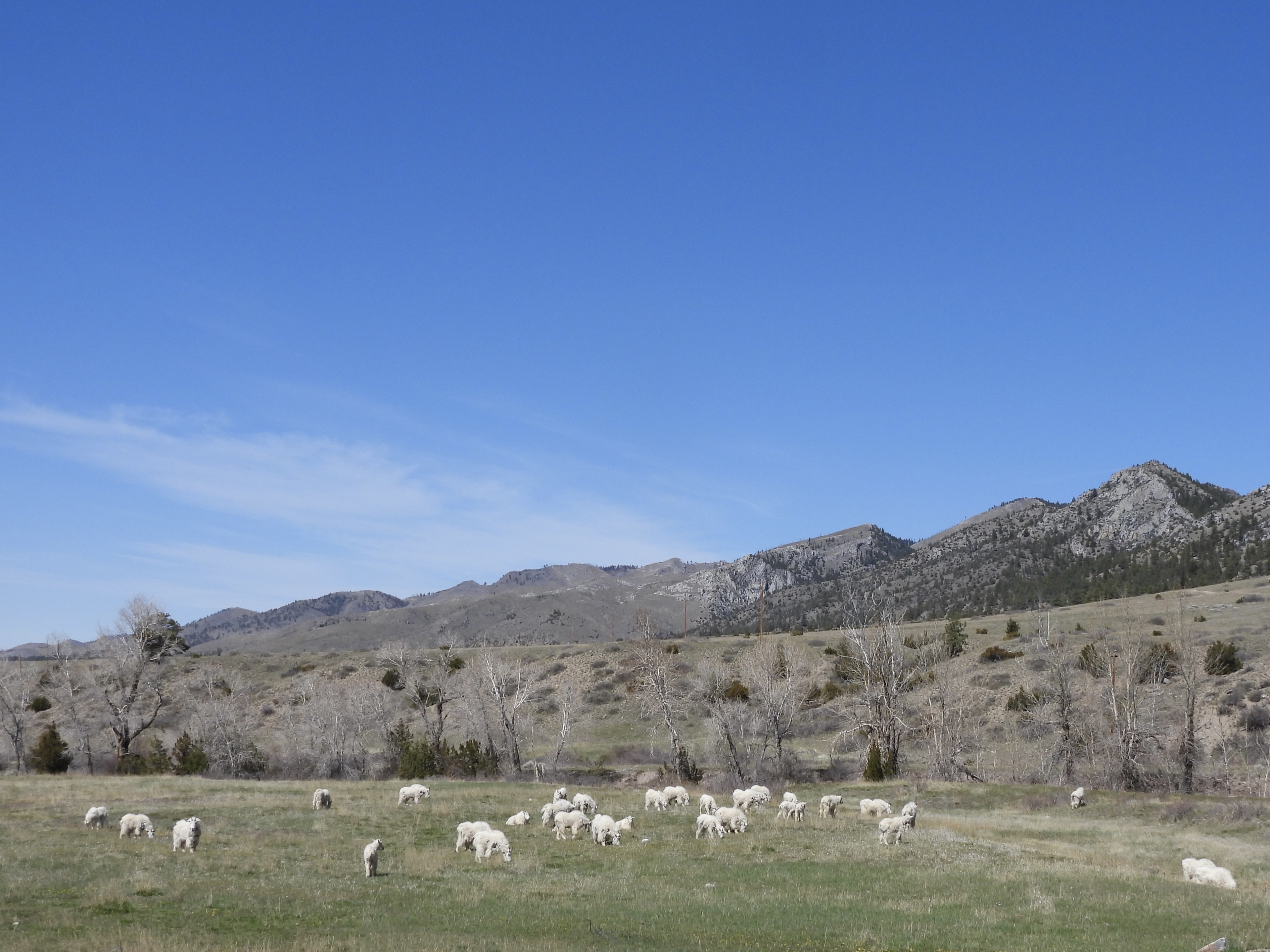
Yesterday, The Middle Daughter (TMD) and I took off for a mid-day excursion to connect with nature outside the Helena Valley. We encountered an impressive array of birds suited to various habitats, mammals typically associated with alpine areas, and flowering plants found in only a handful of western US habitats – all within about 30 miles of home.
Our short trip underscores Southwest Montana’s stunning, accessible biological diversity. How can a notoriously dry, landlocked state like Montana boast such a high concentration of waterfowl and shorebirds? Lewis and Clark County alone has identified over 320 bird species, representing 72% of all species recorded in Montana – a state stretching 230 miles north to south and 630 miles east to west.
The answer lies at the intersection of four key factors: our local environment (physiography), the movement of bird populations (migration), the timing of the seasons (phenology), and our outdoor-oriented population (birders and naturalists).
Southwest Montana sits adjacent to two major north/south flyways: the Pacific and the Central. It’s located roughly halfway between the Gulf of California and the Beaufort Sea, with Helena almost exactly midway between Yellowstone and Glacier National Parks.
Moreover, Southwestern Montana is where four massive North American ecosystems converge:
- The Crown of the Continent
- The Greater Yellowstone Ecosystem
- The Great Plains Grasslands
- The Sagebrush Steppe
This intermountain geography – a mosaic of mountain ranges, grasslands, rivers, and lakes – creates a unique biological engine. The SW Montana region provides the specific food sources, nesting, and shelter sites required by an enormous assortment of species throughout the year.
In biology, an ecotone is a very productive transitional area between two ecosystems, like a lakeshore or the verge where a forest meets a meadow. Southwest Montana appears to function as a massive, regional ecotone.
Beyond these biological principles, there’s a cultural component. The greater Helena area boasts a significant population of people actively engaged with nature, which creates more opportunities for people to be out spotting and reporting on local plants and watchable wildlife.
This intersection of ecosystems, a relative lack of habitat fragmentation compared to more urbanized regions, and our enthusiastic naturalist population, make Helena (in my opinion) the premier place to live for nature lovers. It serves as a vital “rest area” for avian travelers heading north to the Arctic in the spring and south in the fall.
Southwest Montana and the Helena Valley sit almost exactly at the center of this continental biological hotspot.
Imagine a 2,500-mile line drawn from the Gulf of California to the Coronation Gulf of the Beaufort Sea. This trajectory transects hundreds of small lakes and reservoirs, acting as a watery trail for migratory birds. From the Great Salt Lake in Utah to the Great Slave Lake in the Northwest Territories, this path runs directly through Montana.
Within our state borders, that same line connects the Lima Reservoir and Red Rock Lakes area in the south to Freezout Lake and Benton Lake in the middle, and the Tiber Reservoir and Aloe Lake in the north. Lake Helena, Canyon Ferry, and the Regulating Reservoir are three vibrant “dots” on this migratory trail.
This helps explain how tens of thousands of geese, swans, ducks, cranes, and wading birds pass through our valley every year. They are joined by hundreds of thousands of songbirds that spend their summers here. Naturally, where there is prey, there are predators; consequently, we enjoy the presence of over 30 species of raptors across out great state- About 16 species on a regular basis.
The Short Story: The combination of our physical location and the shifting seasons allows us to enjoy the best kind of streaming there is: the migratory stream. Proximity to diverse habitats, unique physiography, and phenology work together to make Helena a vital waypoint on a massive migratory path.
This is what makes this area an extraordinary place to live, work, and explore.


Leave a Reply