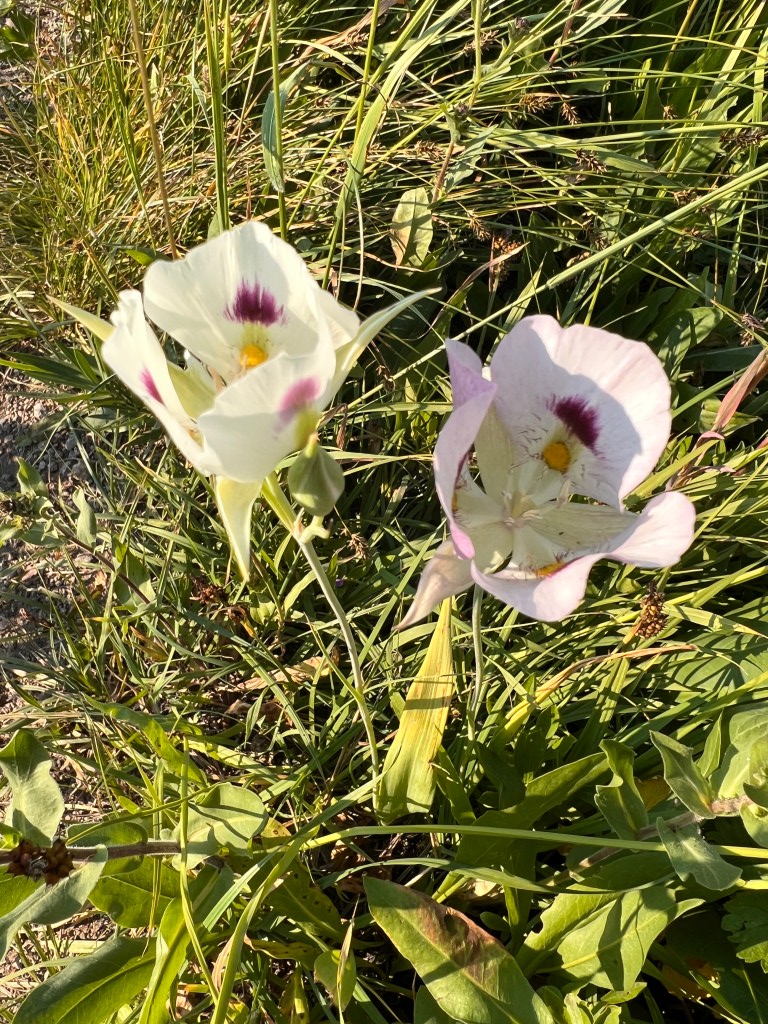

Be serious- nature every day? Yes, every day. It doesn’t need to be an overnight trip or full excursion. You just need to take a little time and learn about where nature is still lurking in your area and then take a few minutes and go. I suspect you’ll start finding time in your week to spend an hour or two- and that really feels good. Take your phone, but put it in silent mode or DND. Be present, not just a tourist.
Fortunately, for the majority of us, nature is close by- even when we are in a city. The Trust for Public Land has a terrific publication from 2017 that provides some mind-blowing statistics about city parks including a table that shows the percent of city populations (for about 100 cities) that are within .5 miles of a city park.
A publication from the U.S. Forest Service, from back in late 2015, indicated that, in 2010 about 50% of the population lived within 50 miles of a National Forest or Grassland and when you widen the circle to 100 miles, it swells to (essentially) 75% of the population. Almost 60 of the nation’s 174 National Forests or Grasslands have more than 1 million people living within 50 miles. So, finding yourself in nature can be a day trip, too.
Being in nature supports our health and well being. Slowing down a touch and being really present in the nature is really good for us. And it appears there is also a much deeper experience. I have friend from Japan who told me about the art of stopping and really soaking in nature’s atmosphere. Shinrin yoku he called it- he explained that it literally means “bathing in the forest atmosphere” and that the goal is to actually stop and immerse yourself in the environment- use all of your senses and just be. Well, not taste, unless you can do so safely.
The National Center for Biotechnical Information, a division of the National Institutes of Health, published an article in 2017 that reviews and summarizes information from 64 studies from around the world that support shinrin yoku as providing therapeutic effects to help reduce the modern maladies that stem from being stressed and connected all the time. While the article clearly states that further studies are needed to support the concept of nature therapy becoming a component of mainstream global healthcare systems, it also quantifies that we have lived only 0.1% of our species history in our current, modern, surroundings. The other 99.99% of our collective history was spent immersed in nature.
The article states in its abstract, “Nature therapy as a health-promotion method and potential universal health model is implicated for the reduction of reported modern-day “stress-state” and “technostress.”.
So, find a map and make a plan, and then go find yourself in nature…everyday!


 Nature, every day.