I’ve taken three walks across the Ambrose and Prairie Trails since the fire. So, I’ve been able to piece some things together.
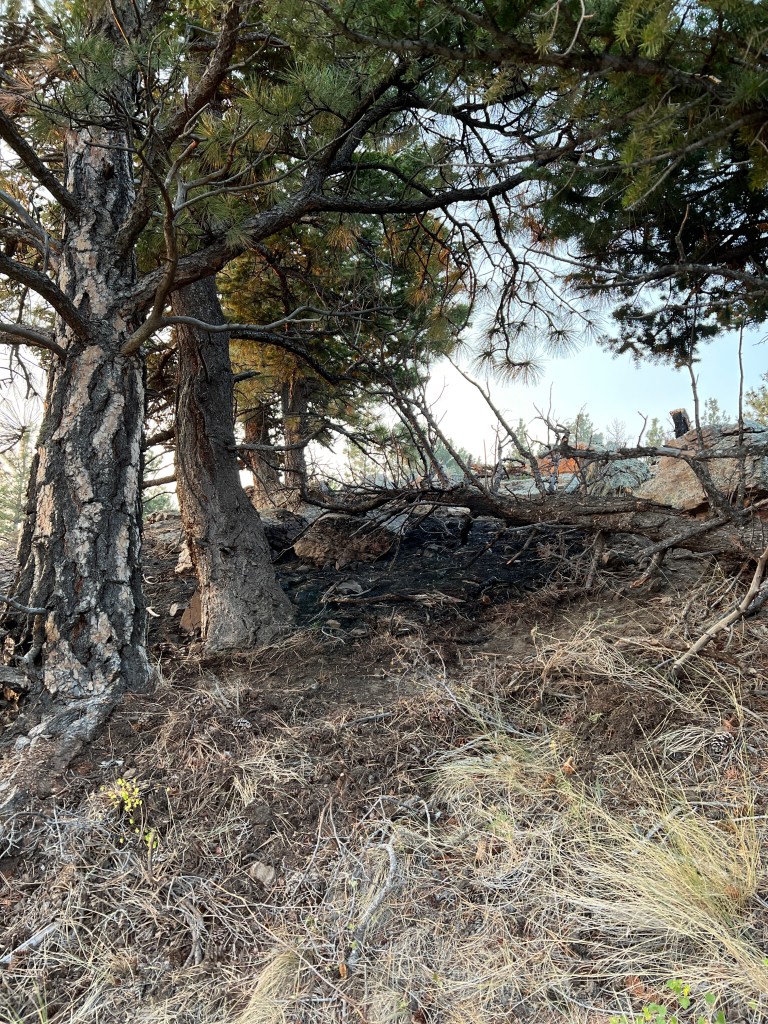
I walked around the western edge of the fire scar a couple of times and it looks like this little spot (pictured above) is the western-most and most downhill location of the burn. I suspect that the fire started here and spread uphill and east- being driven both by the wind and typical fire behavior. There had been no close lightning strikes in this area. We would have heard/felt any strikes this close to home. I suspect this fore was man-made- but its impossible to tell if it was intentional or not.
The fire ran eastward across the face of the hill burning mostly in grasses, forbs, and shrubs. Once it made it around the abutment at the high point on the Prairie Trail, the fire was more-or-less out of the direct impact of the wind, and it began to climb back uphill towards the treeline. The treeline is where the slurry bombers hit it hard. At the top of the Prairie Trail high point, you can see that the fire simply went out- no slurry – no fire line dug. The fire appears to have hit the ridgeline and the wind pushed it back on itself. The wind helped extinguish it. So cool!

If the wind had been calmer, those trees about 50 meters away – nearly all of which are reasonably young Douglas Fir – would have been torched. That would have been a real disaster. Doug Fir are pretty fire resistant to low-intensity fire once they have a nice thick bark built up, but young Doug’s are pretty susceptible to fire even at low intensity. They are resinous and burn fast. This was a really close call.
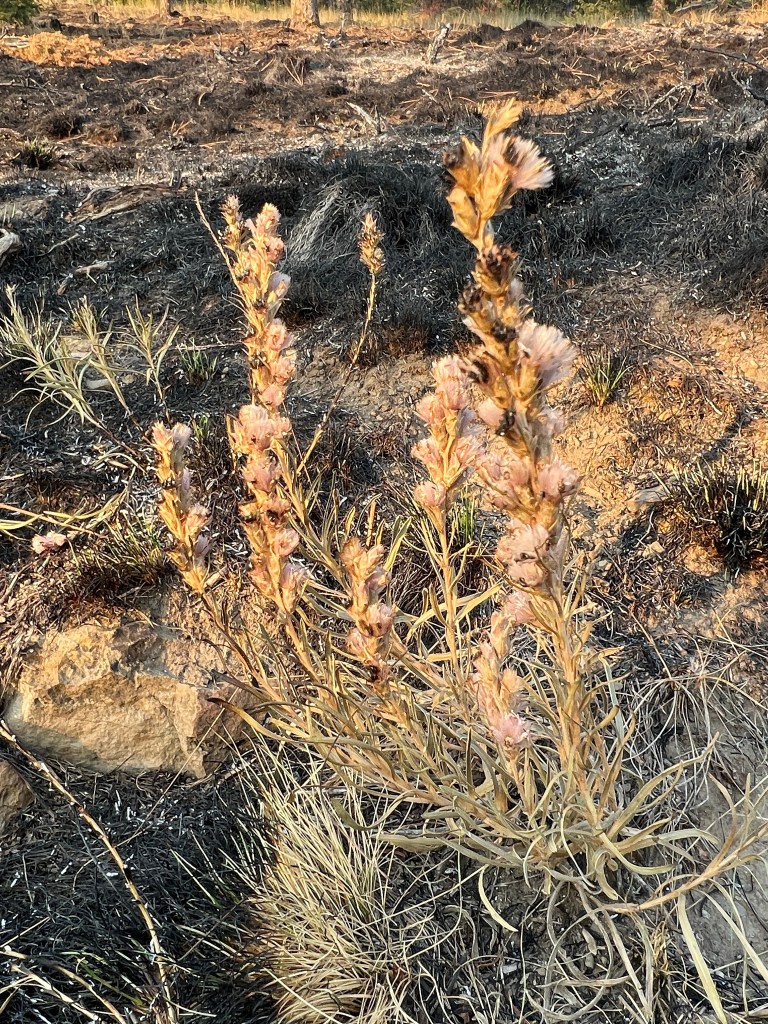
I’ve found dozens of individual Spotted Gayfeathers that were wholly surrounded by the fire but appear to be alive still. This one was actually scorched- but it looks like it is still going to make it.
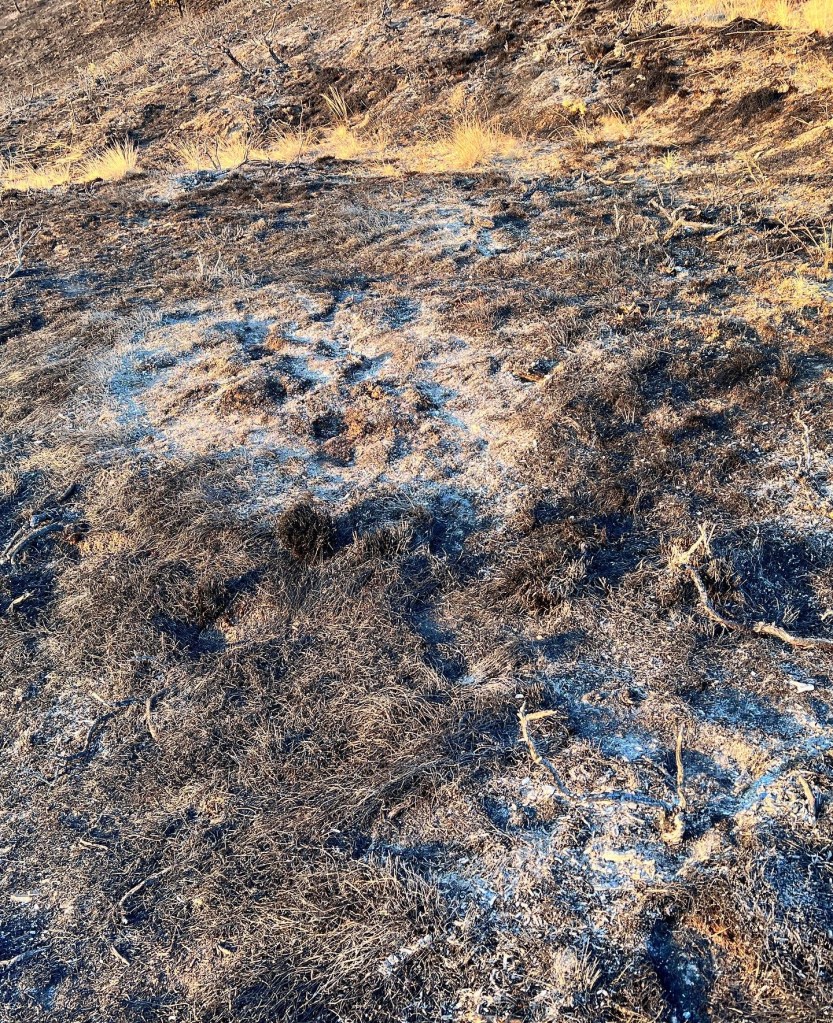
I don’t know if the shrubs are more resinous, less tolerant of fire in general, or just more susceptible- but there are lots and lots of these ash-shadows all over the hillside. Arrowleaf Balsamroot covered this hillside in the spring. They can have a very deep taproot- so I am hopeful that they will come back in force next spring.
 Nature, every day.
Leave a Reply