
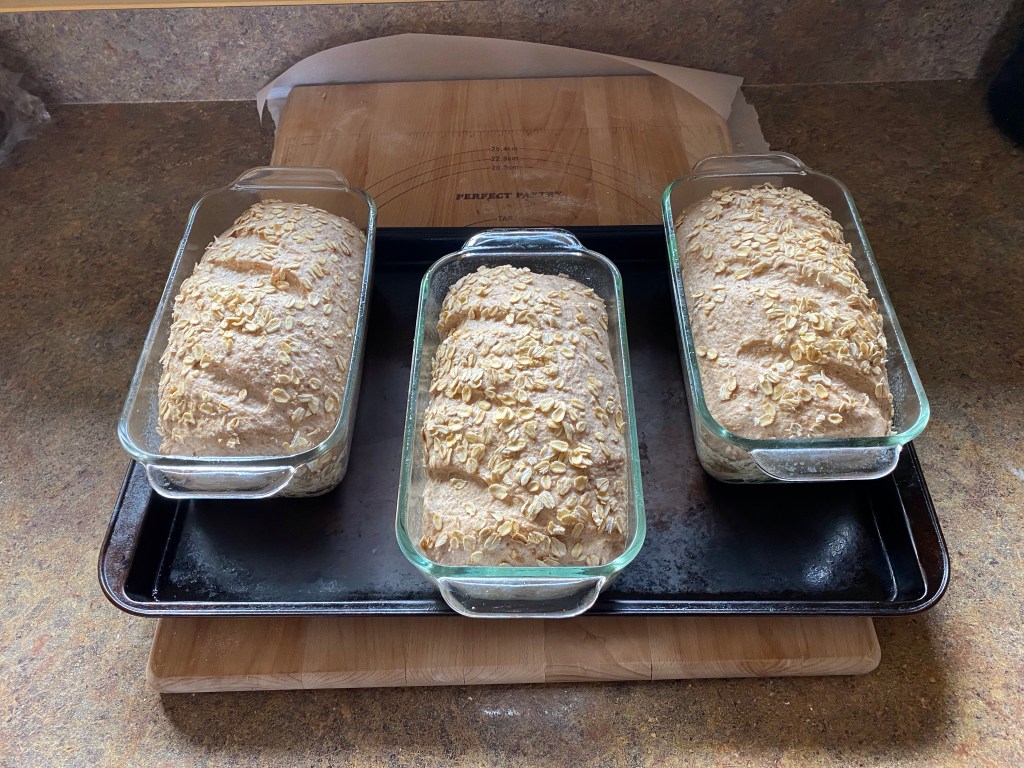
Ready to go in the oven 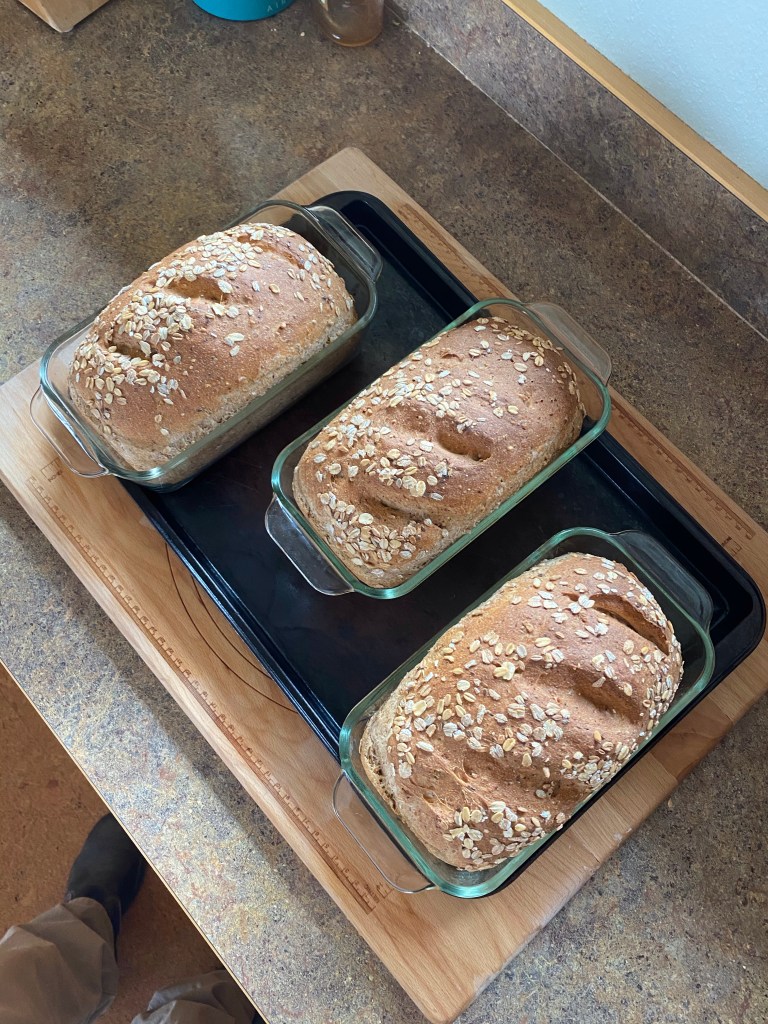
Fresh out of the oven
I have always enjoyed “making”: I’ve always loved cooking. I spent a decade brewing beer- both as a home- and commercial brewer. I’ve been making ceramic bowls and whatnot for almost 15 years, now. But only one the last year have I spend any real effort making bread. Cookies, scones, pies – sure, loads of those are in my past. But bread always seemed intimidating for some reason.
Then, a good friend stated working in a bakery. Then the pandemic hit. Then it seemed like I had the proper opportunity to really spend some quality time learning about bread. So now- at the one year mark, after having made (and eaten) a bit north of 100 loaves of bread, I feel like this recipe is ready to share.
This recipe asks the baker to begin the night before. You make a soaker for the grains and a sponge for the whole what flour. A sponge is just baker speak for a creating a prefermented batch of dough. Whole wheat flour can result is bread that is too dense. By starting a sponge the night before, the whole wheat flour has a chance to really get going. I think the flavor is better and the texture is simply wonderful.
While it may seem like starting a recipe the night before is burdensome, I would argue that it is rather liberating. A significant part of the work is done overnight and the rest of it comes together pretty quickly in the early hours of the morning. I make three loaves- but there is a sidebar on the .pdf for 2, and it would be very easy math to reduce that one, but with four people eating the bread, 3 loaves lasts about a week.
I knead the sponge a bit to get the gas out and tear it up into smaller chunks and place it into the mixing bowl with the oil, honey, water, and soaker. run the mixing hook for a bit and scoop the yeast culture in. Then, once that is all mixed a bit, I add the final two charges of flour and run the hook slowly and work the sides of the bowl with a stiff spatula to keep it all mixing together. Run the mixer for 3-5 minutes and turn the dough out on to a well flour board. Once I knead that for a few minutes, I weigh the boule. I am usually in the 2,360 to 2,370g range. Its a little heavier than the recipe claims, but I’ve not have any problems. I suspect the discrepancy is that I add the dry yeast to a small bit of warm water with a pinch of sugar and four to get it going before mixing it in. That adds a few grams to the overall weight of the recipe.
The temp and oven time is what I have found works best for my elevation (4200 feet above sea level). I suggest experimentation. I also suggest experimenting with a variety of grains. I use 6-8 of the grains in the list of ten at the right side of the page. Some take a LOT longer to soften the others. If I use Sorghum or Kamut, I soak them in water just off the boil for about 3 hours, then add them to the overnight soaker. They are still chewy in the finished product, but they shouldn’t break a tooth. I have started ordering from Bob’s Red Mill. It’s fast and easy and I can get the traditional grains I want to use. For the last few months I have been focused on African and Middle Eastern Grains plus rolled and steel cut oats. Good textures and great flavors.
 Nature, every day.
Leave a Reply